The Crisis Facing Africa’s Crafts: How to Help

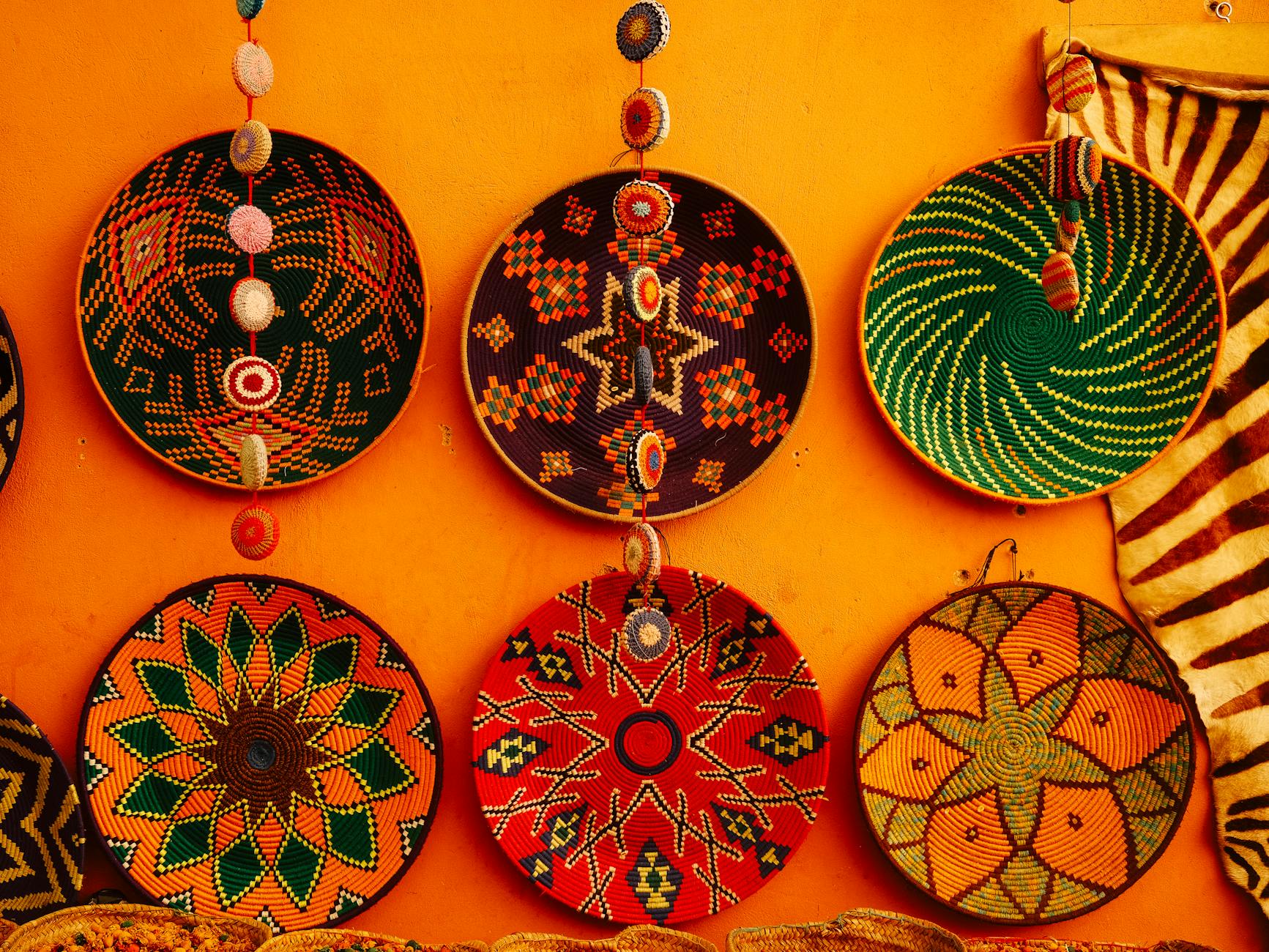
vibrant traditional handcrafted woven baskets display

For centuries, African artisans have passed down extraordinary skills from one generation to the next, such as intricate mandala patterns, hand-painted ceramics, colorful woven textiles, and finely crafted jewelry that tells the story of entire communities. However, these are not relics of the past. They are living traditions, still practiced by skilled hands across the continent today.

But these traditions face threats that could silence them forever. Climate change, poverty, and the rise of mass-produced goods are all putting pressure on the artisans who have kept these crafts alive for generations. Without support, many of these traditions could disappear within our lifetime.

Here’s what’s at stake and what you can do about it.

Africa’s craft heritage: a living legacy

African traditional crafts are far more than beautiful objects. They are a language. Every pattern woven into a textile, every shape pressed into clay, every bead threaded onto a necklace carries meaning which tell stories of community, spirituality, ancestry, and identity. Across the continent, these crafts have served as a way to mark life’s most important moments: births, marriages, harvests, and ceremonies.
colorful moroccan baskets and textiles in marrakech market
Photo by Constanze Marie on Pexels.com

These skills have been passed down through generations not through textbooks, but through hands. A grandmother teaching her granddaughter to weave. A master potter guiding an apprentice. This is how knowledge has traveled through direct, personal transmission that no factory or algorithm can replicate.

Beyond their cultural value, traditional crafts are also an economic lifeline. For millions of artisan households across sub-Saharan Africa, handmade goods are a primary or secondary source of income. They support families, fund school fees, and sustain entire local economies in communities where other opportunities are scarce.

Why these traditions are under threat

Several forces are converging to put traditional African crafts at risk, and they are deeply interconnected.
Climate change is destroying the raw materials that artisans depend on. Natural dyes sourced from plants, clay from riverbeds, plant fibers for weaving, and natural resins for jewelry-making are all becoming harder to access as droughts, floods, and erratic seasons disrupt ecosystems. The very land that supplied generations of craftspeople is changing.
Climate change is destroying the raw materials
young people are moving to cities or other forms of work
Economic pressure is pushing younger generations away from traditional crafts. When a family is struggling to make ends meet, it is difficult to justify spending years mastering a skill that may not immediately pay the bills. Many young people in craft communities are moving to cities or pivoting to other forms of work — leaving fewer people to carry these traditions forward.
Mass-produced goods have flooded African markets, undercutting handmade items on price. A factory-made textile might cost a fraction of a hand-woven one, even though the latter embodies far more skill, time, and cultural significance. Consumers choosing cheap imports — often unknowingly — are accelerating the decline.
Mass-produced goods have replaced handmade items.

The people behind the craft

Behind every piece of traditional craft is a person and often, that person is a woman.
Across the African continent, women make up a significant share of the artisan workforce. Textile weaving, ceramics, basket-making, and beadwork have long been domains where women hold deep expertise and cultural authority. For many women artisans, craft income is not supplementary, but it is the primary resource they control, giving them economic independence and a stronger voice in their households and communities.
women make up a significant share of the artisan workforce

When craft traditions fade, it is often women who lose the most. They lose an income stream, a skill that connects them to their mothers and grandmothers, and a form of expression that has defined their identity for generations.

Supporting traditional crafts is, in many ways, inseparable from supporting women’s empowerment in Africa.


See our impact: Empowering women entrepreneurs in Uganda

You can help preserve Africa’s cultural legacy

These traditions have survived drought, colonization, and economic upheaval. But they cannot survive indifference. The artisans keeping them alive need resources, markets, and visibility. That is where you come in.
vibrant African market crafts

Every donation to Give To Africa helps ensure that the skills held in the hands of today’s artisans are passed on to the next generation. It helps a woman weaver access a fair market for her textiles. It helps a ceramics cooperative buy the tools and training they need. It helps a grassroots organization protect the cultural knowledge that no museum or archive can fully capture.

Leave a Reply

D
D. Scott
donated to Yes Africa Campaign
G
Ghislain
donated to Home Page
C
CHRISTINA
donated to Give to Africa
J
James
donated to Yes Africa Campaign
D
D. Scott
donated to Yes Africa Campaign
G
Ghislain
donated to Home Page
J
James
donated to Yes Africa Campaign
S
Sandip
donated to Donate to Africa
F
Fernandez Stephane
donated to Donate to Africa
D
D. Scott
donated to Yes Africa Campaign

Discover more from Give to Africa

Subscribe now to keep reading and get access to the full archive.

Continue reading