

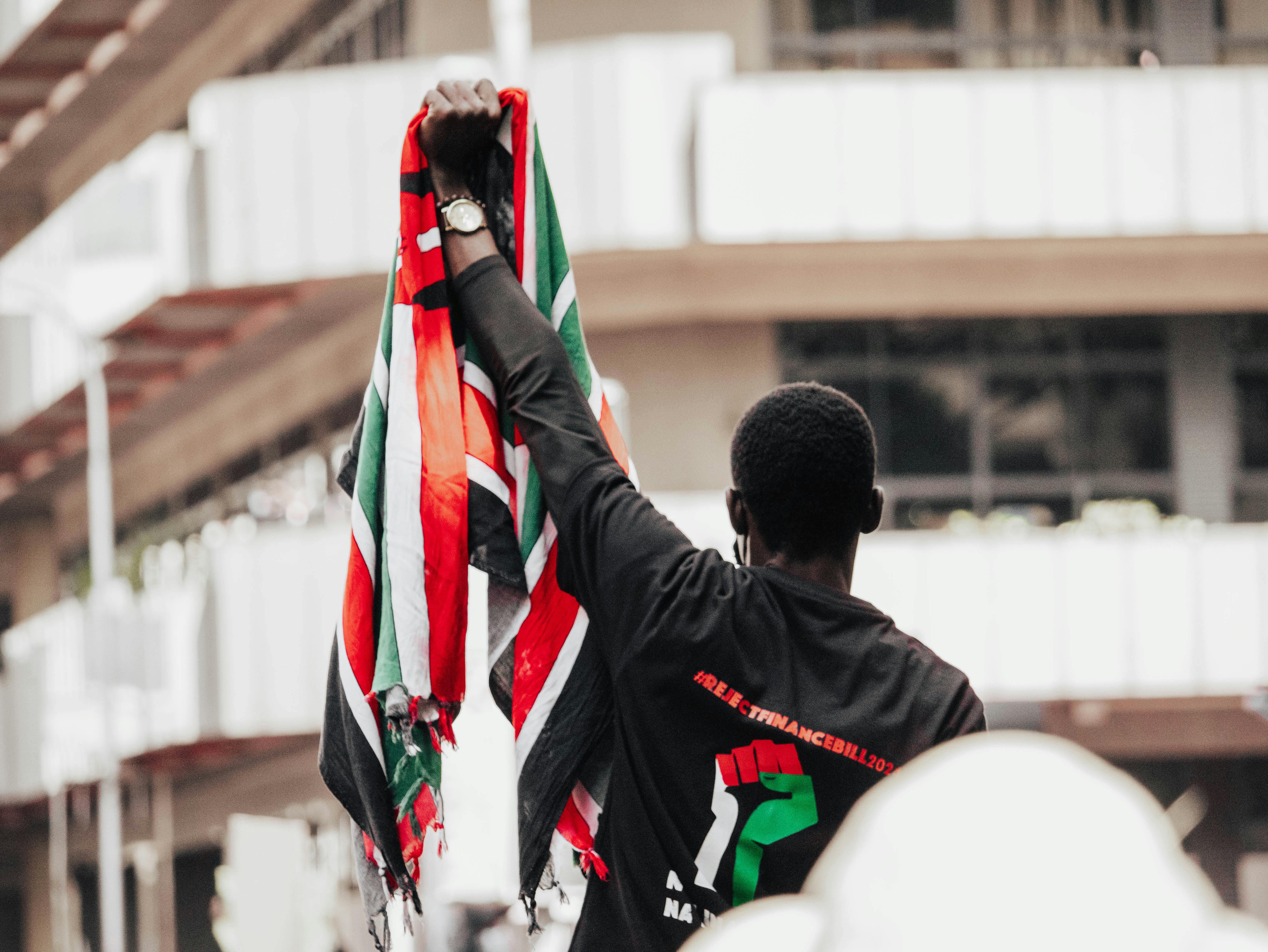
Africa is not one place.
It is 54 countries, thousands of languages, and hundreds of distinct peoples — most of whom the rest of the world has never been properly introduced to. And even within a single country, the diversity can be staggering enough to make the word “country” feel almost inadequate.
Kenya is a perfect example.
There’s a version of Kenya that the world has agreed upon. Safari plains. Maasai warriors in red shukas. Marathon runners breaking records on mountain roads. Nairobi’s skyline rising improbably out of the savannah. It’s not a false version — those things are real, and they’re extraordinary. But they are a fraction of a country so internally diverse that calling it one place almost misses the point entirely.
Kenya contains multitudes. Dozens of distinct peoples, three major language families, ecosystems that range from snow-capped equatorial peaks to Indian Ocean archipelagos to vast northern deserts. The story of Kenya is not one story. It is many, running in parallel, sometimes in tension, always in conversation.
This is our Africa Is Not One Place series. And Kenya is today’s proof.
It is 54 countries, thousands of languages, and hundreds of distinct peoples — most of whom the rest of the world has never been properly introduced to. And even within a single country, the diversity can be staggering enough to make the word “country” feel almost inadequate.
Kenya is a perfect example.
There’s a version of Kenya that the world has agreed upon. Safari plains. Maasai warriors in red shukas. Marathon runners breaking records on mountain roads. Nairobi’s skyline rising improbably out of the savannah. It’s not a false version — those things are real, and they’re extraordinary. But they are a fraction of a country so internally diverse that calling it one place almost misses the point entirely.
Kenya contains multitudes. Dozens of distinct peoples, three major language families, ecosystems that range from snow-capped equatorial peaks to Indian Ocean archipelagos to vast northern deserts. The story of Kenya is not one story. It is many, running in parallel, sometimes in tension, always in conversation.
This is our Africa Is Not One Place series. And Kenya is today’s proof.
Three Families, Forty-Five Peoples
Kenya recognizes 45 ethnic groups. Experts often organize them into three linguistic families — Bantu, Nilotic, and Cushitic — each with its own history of migration, settlement, and cultural development. Understanding these three branches is a useful starting point, but only a starting point: within each, the differences are as striking as the commonalities.
The Bantu peoples make up roughly 70% of the population and are concentrated across the central highlands, the coast, and the western regions. The largest single group is the Kikuyu, historically centered on the fertile slopes of Mount Kenya. Their society was organized not around centralized kingdoms but around age-sets and clan systems, with land as the foundation of both wealth and identity.

That connection to the land made the British colonial seizure of Kikuyu territory — which left a third of the community landless by independence — one of the deepest wounds of colonial Kenya, shaping the Mau Mau uprising and the country’s path to independence.
The Luhya, Kenya’s second-largest group, live in the western highlands and are themselves a confederation of roughly 18 distinct clans — the Bukusu, Maragoli, Tiriki, and others — each with its own dialect and customs. The Kamba of eastern Kenya are known historically as skilled traders and long-distance travelers, their caravans once linking the coast with the interior. The Kisii of the southwestern highlands are renowned for their soapstone carving — the pale green sculptures found in markets across East Africa. The Mijikenda, nine related communities of the coast, are the custodians of the kaya — ancient sacred forest homesteads that served as spiritual

and social centers for centuries, recognized by UNESCO as a World Heritage Site. Each of these peoples is distinct. Grouping them as simply “Bantu” is a linguistic convenience, not a cultural one.

The Nilotic peoples — about 30% of the population — have their own remarkable variety. The Luo, based around the shores of Lake Victoria, are Kenya’s fourth-largest group and one of its most culturally vibrant. Known for their music (the ohangla and benga traditions have produced some of East Africa’s most celebrated artists), their strong oral traditions and
their fierce pride in cultural identity, the Luo have also produced many of Kenya’s most prominent intellectuals and political figures.
Then there are the Maasai — perhaps the most globally recognized of all Kenyan peoples, and also among the most misrepresented. Semi-nomadic pastoralists whose territory straddles Kenya and Tanzania, the Maasai have maintained their cultural traditions with remarkable tenacity in the face of enormous pressure: colonial land seizures, conservation policies that restricted their movement, and a tourism industry that has commodified their image while often bypassing their communities. The Maasai are not a relic. They are a living people navigating the 21st century on their own terms, in ways far more complex than a postcard allows.
The Kalenjin — a confederation of eight distinct groups including the Kipsigis, Nandi, Tugen, and Marakwet — occupy the western highlands and are perhaps best known globally for producing a disproportionate share of the world’s elite distance runners. But the Kalenjin are also farmers and cattle keepers, with rich initiation traditions and a deep relationship with the land of the Rift Valley.

The Cushitic peoples of the north and northeast — including the Somali, the Oromo, and the Rendille — occupy the arid borderlands and are often the least visible in mainstream Kenyan national narratives, despite constituting a significant portion of the country’s territory and population. The Somali community in Kenya, centered largely in Nairobi’s Eastleigh neighborhood and the northeastern counties, has built one of the most dynamic commercial networks in East Africa — a fact that receives far less attention than it deserves.
Forty-five peoples. One country. Not one story.
The Coast Is Its Own World
Running along Kenya’s eastern edge for hundreds of kilometers is a coastline that has been in conversation with the wider world for over a thousand years — and whose culture, as a result, is unlike anywhere else in the country.
The Swahili Coast is one of the great crossroads of human history. From the 8th century onward, Africans and Arabs mixed along this shoreline to create a unique identity — what we now call Swahili culture — producing a string of powerful, independent city-states including Mombasa, Malindi, and Lamu that traded with Arabia, Persia, India, and China. The word Swahili itself derives from the Arabic sahil, meaning coast — but the culture it names is fundamentally African, shaped by centuries of exchange rather than replacement.
The Swahili Coast is one of the great crossroads of human history. From the 8th century onward, Africans and Arabs mixed along this shoreline to create a unique identity — what we now call Swahili culture — producing a string of powerful, independent city-states including Mombasa, Malindi, and Lamu that traded with Arabia, Persia, India, and China. The word Swahili itself derives from the Arabic sahil, meaning coast — but the culture it names is fundamentally African, shaped by centuries of exchange rather than replacement.

The architecture of Lamu’s Old Town — coral stone buildings, carved wooden doors, narrow winding streets — is a living artifact of that synthesis, and people have lived in these coral stone buildings for over 700 years. Mombasa’s Fort Jesus, built by the Portuguese in 1593, stands today as a UNESCO World Heritage Site and a compressed history of the power struggles that swirled around this coastline.
This is what “Africa” looks like when you zoom in: not one culture absorbing another, but something entirely new being made at the point of contact. That story doesn’t fit in a postcard, and it certainly doesn’t fit in a single-story version of a continent.

Image by Mrs. Khadija Issa Twahir a Librarian Lamu Fort Library
One Language Holding It Together
With 45 ethnic groups and over 60 languages spoken within its borders, Kenya could easily have fractured along linguistic lines. That it has maintained a degree of national cohesion owes much to Kiswahili — the Bantu-rooted lingua franca that became the national language at independence and is now spoken by an estimated 200 million people across the continent.
In Kenya, virtually every citizen speaks it, regardless of ethnic background. It is the language of the market, the school, the political rally, and the street corner — what makes a Kikuyu from Nyeri and a Somali from Garissa and a Luo from Kisumu fellow Kenyans.
Alongside Swahili, a distinctly Kenyan invention has emerged: Sheng, a fluid code-switching language that blends Swahili, English, and whatever other languages its speakers bring to the mix. Born in Nairobi’s working-class neighborhoods in the 1970s and 80s, Sheng is now spoken widely among young urban Kenyans — always evolving, always absorbing, and entirely its own thing. Even Kenya’s languages refuse to be reduced to one story.
Alongside Swahili, a distinctly Kenyan invention has emerged: Sheng, a fluid code-switching language that blends Swahili, English, and whatever other languages its speakers bring to the mix. Born in Nairobi’s working-class neighborhoods in the 1970s and 80s, Sheng is now spoken widely among young urban Kenyans — always evolving, always absorbing, and entirely its own thing. Even Kenya’s languages refuse to be reduced to one story.
Africa Is Not One Place. Kenya Is Proof.
The single-story version of Kenya — safari, Maasai, marathon — is not wrong. It is just radically incomplete.
Behind it lies a country of extraordinary internal complexity: peoples with distinct histories and languages and ways of being in the world; coastlines shaped by millennia of global trade; highlands where altitude produces both tea and world-class runners; deserts where pastoralists navigate borders that colonial powers drew without them in mind.
Behind it lies a country of extraordinary internal complexity: peoples with distinct histories and languages and ways of being in the world; coastlines shaped by millennia of global trade; highlands where altitude produces both tea and world-class runners; deserts where pastoralists navigate borders that colonial powers drew without them in mind.

This is the work of the Africa Is Not One Place series: not to overwhelm, but to replace a vague, flattened idea of a continent with something real. The more clearly you can see a place — its peoples, its contradictions, its genius — the more meaningfully you can engage with it.
This is the first of several posts we’ll be publishing on Kenya. We’re only getting started.
Follow Give To Africa on Instagram and LinkedIn, or subscribe to our newsletter to keep up with the #AfricaIsNotOnePlace series.
Give To Africa is a nonprofit dedicated to connecting donors with vetted African causes and organizations. Learn more at 2africa.org.
Leave a Reply