

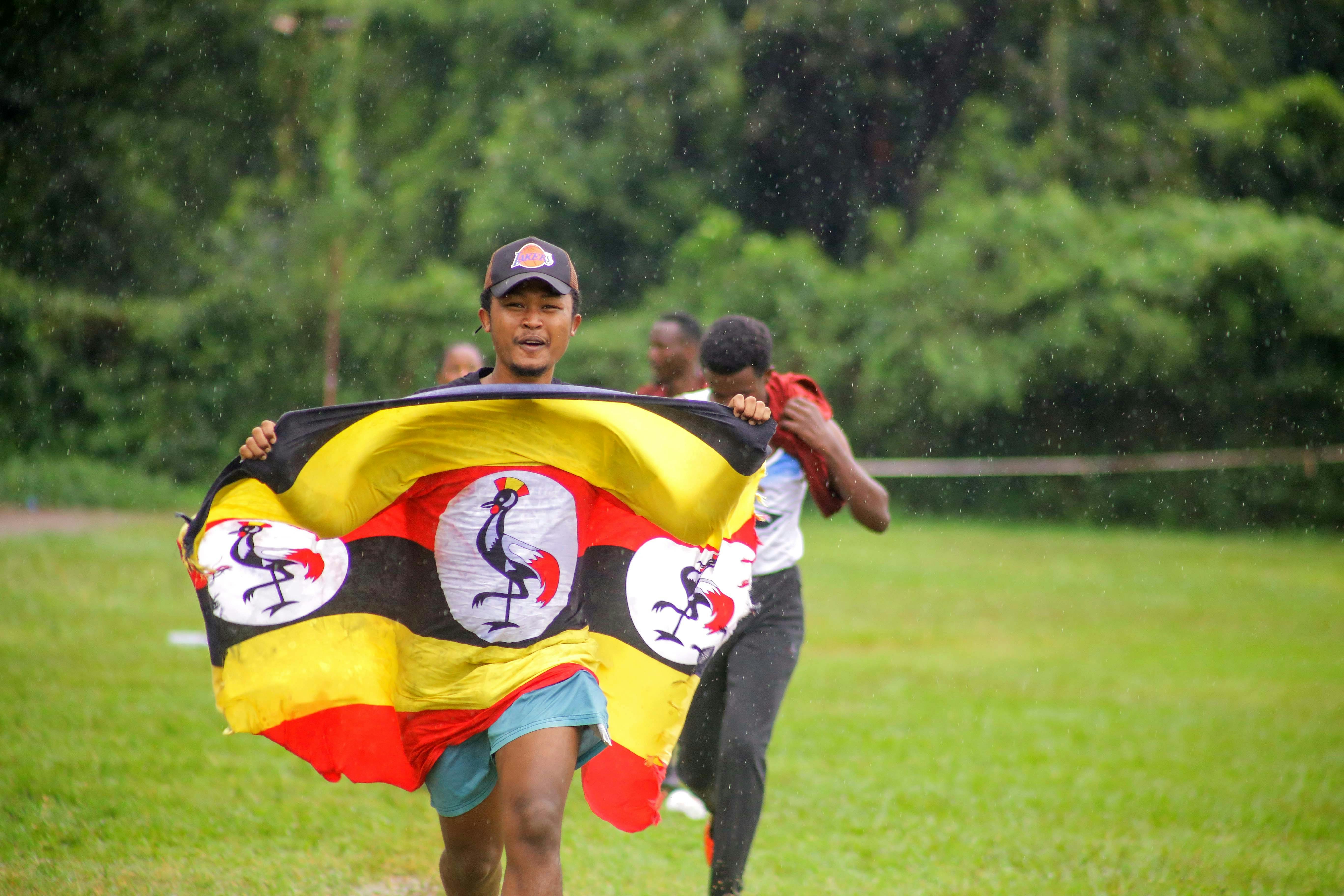
Africa is not one place.
It is 54 countries. Thousands of languages. Hundreds of distinct peoples, kingdoms, ecosystems, and histories that the rest of the world barely knows. Every time we reduce the continent to a single image or a single story, we lose something real. We lose a rainforest that shelters half the world’s remaining mountain gorillas. We lose a kingdom that has governed itself with sophistication since the 14th century. We lose a festival on the banks of the Nile that has become one of the most celebrated musical gatherings on earth.
We lose Uganda.
Uganda is one of Africa’s most culturally rich and ecologically diverse countries — and one of its least understood. Uganda sits in the heart of East Africa. Though smaller than Oregon, this lush land is incredibly diverse. It quietly defies every common generalization about the continent. Winston Churchill called it the Pearl of Africa over a century ago. The name has stuck because it fits.
At Give To Africa, our Africa Is Not One Place series exists because we believe understanding a place is the first step toward meaningfully supporting it. So before we talk about needs, programs, or initiatives, we want to introduce you to Uganda the way it deserves: on its own terms.
It is 54 countries. Thousands of languages. Hundreds of distinct peoples, kingdoms, ecosystems, and histories that the rest of the world barely knows. Every time we reduce the continent to a single image or a single story, we lose something real. We lose a rainforest that shelters half the world’s remaining mountain gorillas. We lose a kingdom that has governed itself with sophistication since the 14th century. We lose a festival on the banks of the Nile that has become one of the most celebrated musical gatherings on earth.
We lose Uganda.
Uganda is one of Africa’s most culturally rich and ecologically diverse countries — and one of its least understood. Uganda sits in the heart of East Africa. Though smaller than Oregon, this lush land is incredibly diverse. It quietly defies every common generalization about the continent. Winston Churchill called it the Pearl of Africa over a century ago. The name has stuck because it fits.
At Give To Africa, our Africa Is Not One Place series exists because we believe understanding a place is the first step toward meaningfully supporting it. So before we talk about needs, programs, or initiatives, we want to introduce you to Uganda the way it deserves: on its own terms.
Uganda’s Geography and Natural Wonders
Uganda sits at the crossroads of East and Central Africa, bordered by Kenya, South Sudan, the Democratic Republic of Congo, Rwanda, and Tanzania. Within its borders you’ll find an almost absurd concentration of natural wonders.

Lake Victoria — Africa’s largest freshwater lake and the source of the White Nile — occupies much of the country’s southern edge. The Nile begins its 4,000-mile journey in Jinja. From there, the river carves through forests and savannahs. It eventually explodes through a narrow gorge at Murchison Falls. This 43-meter plunge is one of Africa’s most dramatic sights. To the west, the Rwenzori Mountains — dubbed the “Mountains of the Moon” by ancient explorers — rise to snow-capped peaks that seem impossibly placed on the equator. In the southwest, the ancient rainforest of Bwindi Impenetrable National Park shelters nearly half of the world’s remaining mountain gorillas.

Over 1,000 bird species call Uganda home — more than in all of North America. The Big Five roam its national parks. Chimpanzees peer from the canopies of Kibale Forest. The rare shoebill stork stalks the papyrus swamps near Lake Victoria. For a country this size, the density of life here is staggering.
Uganda’s 56 Ethnic Groups and Cultural Diversity
This is the part that most people never hear about — and it’s the part that makes “Africa is not one place” not just a slogan, but a lived reality.
Uganda is home to over 56 recognized ethnic groups, each with its own language, traditions, and history. To speak of “Uganda” as a single culture is a little like speaking of “Europe” as one — technically accurate, practically misleading.
Uganda is home to over 56 recognized ethnic groups, each with its own language, traditions, and history. To speak of “Uganda” as a single culture is a little like speaking of “Europe” as one — technically accurate, practically misleading.
The Baganda, whose ancestral kingdom of Buganda gives the country its name, are the largest group and have long been centered in the fertile lands surrounding Kampala, the capital. Their kingdom — one of the most organized and politically sophisticated pre-colonial states in all of Africa — dates to the 14th century, and the Kabaka (king) remains a living cultural institution today.

Photo by zatrokz on FreeImages
Known for their elaborate ceremonies, the Baganda also excel in barkcloth craftsmanship. They also speak Luganda. This language is so common it acts as a national lingua franca.
Moving to the north, the Acholi and Langi carry the legacy of the Nilotic peoples, with deep oral traditions and a history shaped in part by decades of conflict. In the far northeast, the Karamojong are semi-nomadic pastoralists whose striking cultural traditions — including elaborate beadwork and age-based community

structures — remain largely intact even as the modern world presses in. The Banyankole of the west are known for their cattle-centered culture; the Bagisu of the slopes of Mount Elgon for the Imbalu, a circumcision rite of passage that draws communities together in collective ceremony every two years.
Music and dance animate all of it. The Bakisimba dance of the Baganda, with its rapid footwork and waist movements rooted in royal court ritual, is one of the most recognized; but across the country, every major life event — harvest, marriage, initiation, funeral — has its own rhythm, instrument, and movement tradition. Uganda’s contemporary music scene, from Afrobeats to Afrofusion, carries this energy forward, and the annual Nyege Nyege Festival in Jinja has become one of Africa’s most celebrated musical gatherings.
Fifty-six peoples. One country. Not one story.
Uganda Today: People, Challenges, and Resilience
Uganda’s population has crossed 45 million and is among the youngest in the world, with people aged 18 to 30 making up nearly a quarter of all Ugandans. That is both a profound source of potential and a profound challenge.
The country has made real gains in reducing extreme income poverty over the past two decades. But multidimensional poverty — deprivation in education, health, clean water, and economic opportunity simultaneously — remains the lived reality for roughly 44% of the population, with higher rates in the northern Karamoja region. Nearly 2.4 million Ugandans were in need of humanitarian assistance in 2024, including 1.6 million children. Uganda also hosts more than 1.8 million refugees, one of the largest refugee populations in the world, with people arriving from South Sudan, DRC, and beyond.
The country has made real gains in reducing extreme income poverty over the past two decades. But multidimensional poverty — deprivation in education, health, clean water, and economic opportunity simultaneously — remains the lived reality for roughly 44% of the population, with higher rates in the northern Karamoja region. Nearly 2.4 million Ugandans were in need of humanitarian assistance in 2024, including 1.6 million children. Uganda also hosts more than 1.8 million refugees, one of the largest refugee populations in the world, with people arriving from South Sudan, DRC, and beyond.

Access to electricity remains a barrier for millions in rural communities. Youth unemployment is acute: over 40% of Ugandans between 15 and 24 are not in employment, education, or training.

Photo by Vilij Corps: https://www.pexels.com/photo/family-against-rural-background-20903274/
These are not abstract statistics — and they are not the whole story either. Uganda’s resilience is real. Communities have rebuilt after conflict. Conservation efforts have brought mountain gorilla populations back from the brink. Local organizations, entrepreneurs, and activists are doing extraordinary work, often with minimal outside support.
The complexity here is the point. A country this layered — 56 peoples, ancient kingdoms, equatorial glaciers, one of the world’s most vibrant music scenes, and some of its most acute humanitarian needs — cannot be understood from a single angle. No country should be reduced to crisis alone, and neither should it be defined by beauty alone. Ultimately, Uganda is both of these things and more.
See our impact: Empowering women entrepreneurs in Uganda
Africa Is Not One Place. Uganda Is Proof.
This is why we do this series.
Not to overwhelm you with information, but to replace a vague, flattened idea of a continent with something real: a name, a people, a place with its own textures and contradictions and genius. The more specific your picture of Africa becomes, the more meaningful your engagement with it can be — whether that’s following along, sharing what you’ve learned, or eventually supporting the organizations doing the work on the ground.
Uganda is not a monolith, and it is not a charity case. It is a country of kingdoms and music, of equatorial snow and ancient rainforests, of 56 peoples and a million stories. It is also a country where targeted, well-designed support can make a tangible and lasting difference in people’s lives.
In the weeks ahead, we’ll be sharing more about Uganda — its regions, its history, and the organizations doing meaningful work there. We’re just getting started.
Follow Give To Africa on Instagram and LinkedIn, or subscribe to our newsletter to keep up with the #AfricaIsNotOnePlace series
Not to overwhelm you with information, but to replace a vague, flattened idea of a continent with something real: a name, a people, a place with its own textures and contradictions and genius. The more specific your picture of Africa becomes, the more meaningful your engagement with it can be — whether that’s following along, sharing what you’ve learned, or eventually supporting the organizations doing the work on the ground.
Uganda is not a monolith, and it is not a charity case. It is a country of kingdoms and music, of equatorial snow and ancient rainforests, of 56 peoples and a million stories. It is also a country where targeted, well-designed support can make a tangible and lasting difference in people’s lives.
In the weeks ahead, we’ll be sharing more about Uganda — its regions, its history, and the organizations doing meaningful work there. We’re just getting started.
Follow Give To Africa on Instagram and LinkedIn, or subscribe to our newsletter to keep up with the #AfricaIsNotOnePlace series
Give To Africa is a nonprofit dedicated to connecting donors with vetted African causes and organizations. Learn more at 2africa.org.
Leave a Reply